Common Mistakes in Classroom Group Work and How to Fix Them
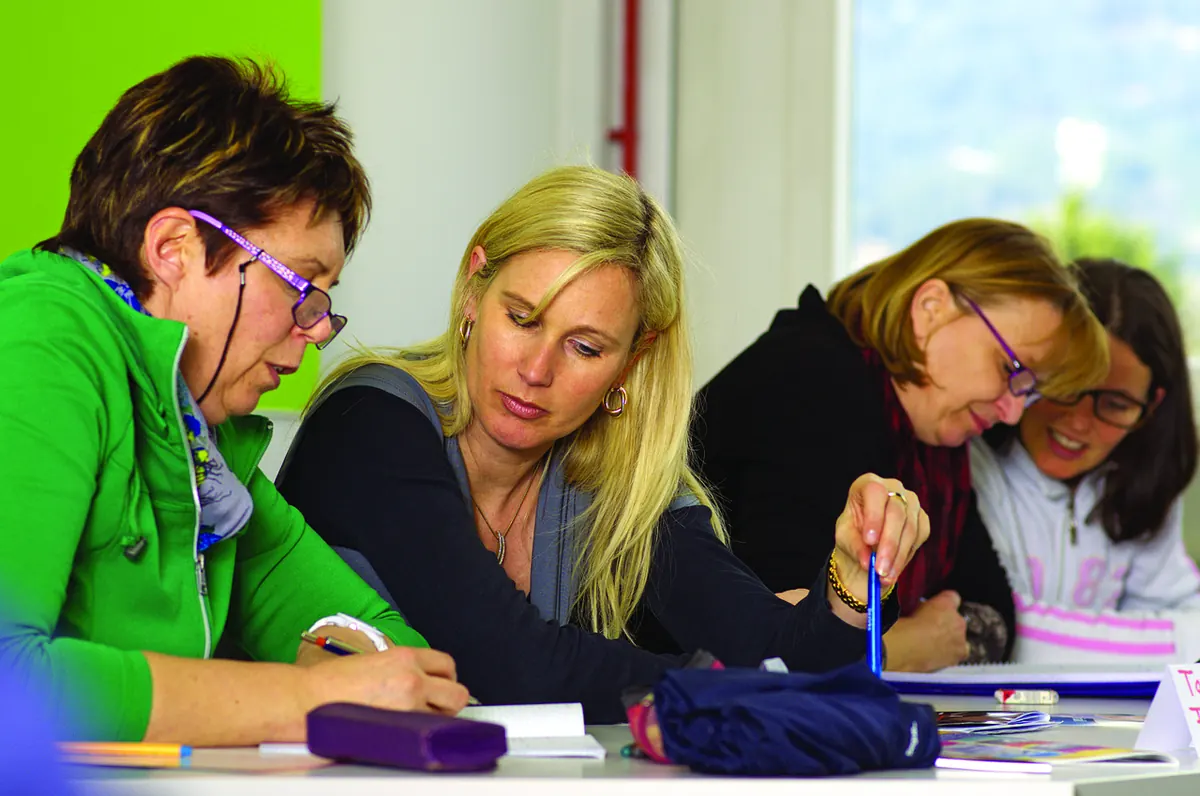
Group work looks effortless from the front of the room. Four students lean over a table, someone uncaps a marker, and the noise level suggests productive thinking. Then you walk past and see that the entire planning sheet is in one handwriting, two students are watching, and one has quietly started an unrelated task.
That gap between how group work looks and how it actually functions is where most of the trouble lives. The encouraging part is that the common failures are predictable, which means they can be fixed with adjustments small enough to make before your next lesson rather than next term.
Uneven Participation Is Usually a Design Problem
Every teacher can name the student who ends up holding the pen. The instinct is to read this as a motivation issue, but in most cases the task itself made the imbalance easy. One shared product, one set of materials, and an instruction like "work together" give a confident student every reason to take over and a hesitant one every reason to step back. Nobody has done anything wrong; the setup simply rewards the fastest talker.
The fix is to build in individual accountability without doubling your marking. Each student keeps their own planning sheet or notes, even though the group hands in one product. Presenters are chosen at random at the end, so the group has a reason to make sure everyone can explain the work. Three students are usually harder to hide in than five, so shrink groups before you try anything more elaborate.
Signs the group has split into workers and passengers
- One student holds the pen for long stretches while others watch
- The same two voices answer every question you ask the group
- A group member cannot say what the group is currently doing
- A group finishes suspiciously fast, or not at all while appearing busy
One caution: silence is not the same as disengagement. Some students need a minute of processing before they have anything to say, and a group that chatters constantly is not necessarily thinking. Two minutes of silent solo work before discussion begins is the cheapest fix available, and it usually raises the quality of what gets said next.
Roles Need Actions, Not Titles
Assigning roles is standard advice, and it half-works. It half-fails because roles are often handed out as labels — "you're the leader" — with nothing attached to them. A role changes behaviour only when it comes with something to do in the first five minutes and something to check before the group finishes.
- Facilitator: opens by asking each person for one idea before anyone comments on those ideas.
- Recorder: captures the group's decisions and reads them back before the group moves on.
- Timekeeper: owns the visible timer and calls the halfway point out loud.
- Materials manager: collects, counts and returns everything, and knows what is missing.
- Questioner: must name one weakness in the group's plan before it is finalised.
- Reporter: gives the summary, and can be swapped at the last minute.
Match the number of roles to the number of people, and rotate deliberately rather than randomly so the same student is not permanently the recorder. Resist grading the roles themselves. What you want to observe is whether the group can run for twenty minutes without you standing at the table.
Instructions That Survive Contact With the Room
Spoken instructions fade in about ninety seconds, especially in a room where six conversations have just started. Write the task where it stays visible, and keep it to three lines: what you are making, who it is for, and how the group will know it is done.
By the end of twenty minutes, your group will have one diagram showing how water moves through the cycle, on the sheet provided. It is finished when someone from another group can follow it without asking a question.
Show a weak example and a strong example side by side; students calibrate to what they can see far faster than to what they hear. Then add a checkpoint in the middle: "At twelve minutes I will ask each group for one sentence about what you have decided." That single sentence does more for pacing than a dozen reminders to stay on task.
Circulate, Don't Rescue
Walking around is not the same as monitoring. Carry a simple tally on a clipboard and note who has spoken, not what they said. When you reach a quiet table, count to ten before saying anything — groups often need a moment of discomfort before someone takes responsibility.
When you do step in, ask rather than tell. "Who is doing which part, and how do you know?" and "What is your next step?" put the thinking back where it belongs. Save content corrections for errors that genuinely block progress; everything else can wait for the debrief, where the whole class benefits from the same correction.
Keep a short record of which groups needed help and why. After three or four lessons you will start to see patterns — a particular pairing, a particular time of day, a particular type of task — and those patterns are far more useful than a general impression that group work "doesn't work with this class".
Reflection That Isn't "It Went Well"
The standard debrief, a quick "how did it go?" followed by "good", produces nothing you can use. Make reflection short, written and individual first, so the confident voices do not set the answer for everyone else.
- What did your group do in the first five minutes?
- What did you personally do that the group would have missed?
- What will you change next time you work in a group?
Three minutes is plenty. Collect the responses, flick through them, and read one or two anonymised examples aloud next lesson. Grade the specificity of the reflection, not its enthusiasm. And use what you read when you form the next set of groups, rather than filing it away.
A Routine You Can Run Next Week
If you want to test all of this at once, here is a sequence that fits inside a single lesson.
- Put groups of three on the board, named, so nobody has to negotiate membership.
- Hand out role cards with actions printed on them, and rotate who holds which.
- Give two minutes of silent solo thinking before anyone is allowed to talk.
- Leave the task on the board in three lines, plus a stated halfway checkpoint.
- Circulate with a tally, intervene only with questions, and note who spoke.
- Close with three minutes of written reflection using two prompts.
Change one element at a time if you can. Swapping everything at once makes it impossible to tell which adjustment did the work, and group work has a habit of improving for reasons nobody predicted. The aim is not a perfectly managed lesson; it is a room where the quiet student has a defined job, the capable student has a reason to explain rather than take over, and everyone leaves knowing one specific thing they would do differently.
Photo: 14995841 / Pixabay

Five Low-Cost Creativity Prompts for Reluctant Writers
Five minimal-supply prompts — six-sentence stories, object manuals, found words, dialogue, and hand-drawn...

Paper Flashcards vs. Digital Flashcards: A Practical Comparison for Busy Students
A side-by-side look at paper and digital flashcards — cost, portability, review speed and focus — so you...
About Us