Spaced Repetition vs. Active Recall: Which Study Method Fits Your Learning Style?
Two students sit down with the same chapter on the same evening. The first rereads it three times, highlights a dozen lines, and closes the book feeling solid. The second reads it once, shuts the book, writes down everything she can remember on a blank page, checks what she missed, and schedules a return visit for tomorrow. Both evenings feel like studying. Only one of them will still know the material a month from now.
The habits behind those two evenings are active recall and spaced repetition. They are usually pitched as rivals, as if you have to pick a camp and defend it. They are not rivals. They work on different parts of the same problem, and once you see that, choosing between them stops being a question of identity and becomes a question of timing.
What Each Method Actually Asks of You
Active recall is retrieval. You put the material away and pull it back out of your head: a blank page, a practice question, an explanation given out loud to an empty room. The defining feature is that nothing is in front of you prompting the answer. That is also why it feels bad. Struggling to remember something you read twenty minutes ago is uncomfortable, and discomfort is exactly the signal that the memory is being worked rather than merely recognised.
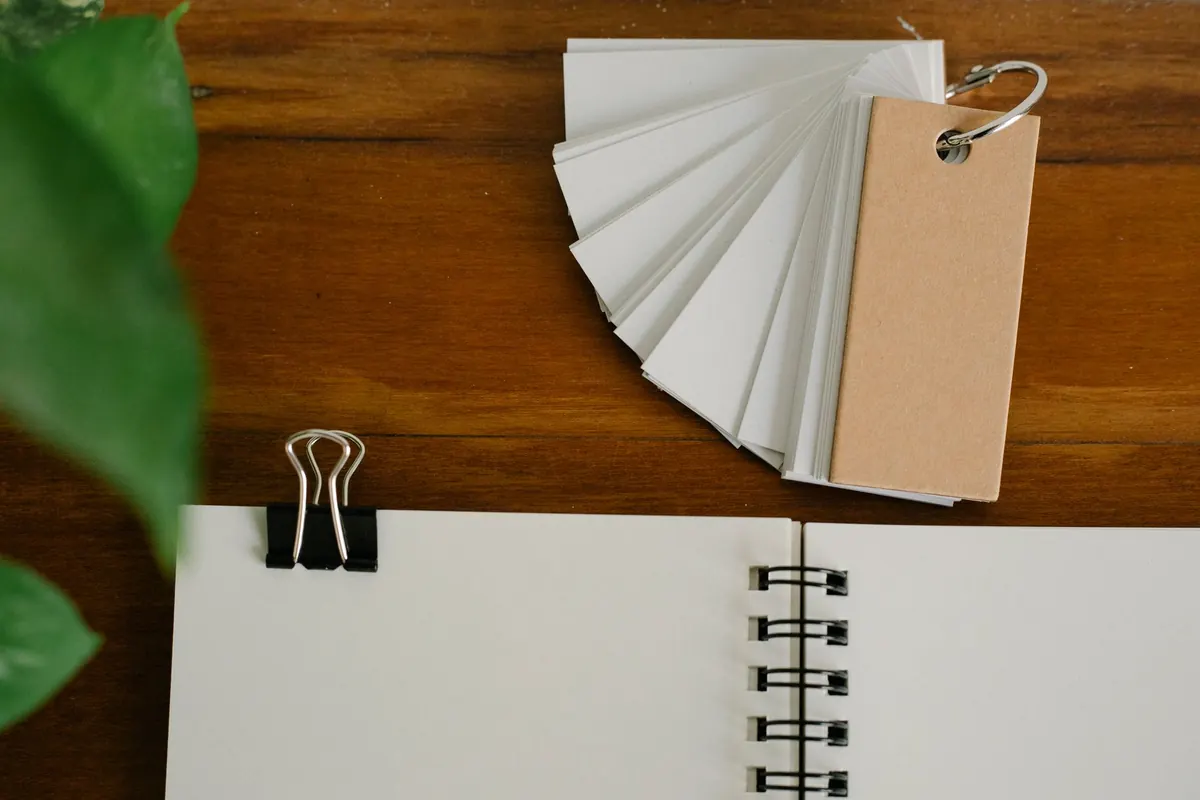
Spaced repetition is a scheduling rule, not a study technique. Instead of reviewing something five times in one sitting, you review it once, then again a day later, then a few days after that, then a week or two later. Each successful recall at a longer gap tells you the memory is holding. Each failure tells you to shorten the gap. The intervals do the work; the technique filling those intervals can be anything, including active recall.
That is the key distinction. Active recall answers how you should study. Spaced repetition answers when. You can do either without the other, and most students accidentally do neither: they reread, and they do it all in one night.
Where Spaced Repetition Wins
Spacing is at its best when the material is made of many small, separable pieces that simply have to be held: vocabulary in a second language, anatomical terms, irregular verb forms, chemical symbols, keyboard shortcuts, case law names, formulas. These items are not difficult to understand. They are difficult to keep.
It also wins whenever your deadline is far away. If the exam is in four months, or the language is one you intend to speak for years, a short daily review beats a long weekly session almost every time. Fifteen minutes a day is easier to protect than two hours on Sunday, and the shorter sessions keep each item closer to the edge of forgetting, which is where recall does the most good.
One caution: spacing multiplies whatever you feed it. If your prompts are vague or bloated, you will simply be reminded of your own bad cards for months. Spacing is a delivery system, not a quality filter.
Where Active Recall Wins
Recall is the stronger choice when understanding matters more than retention. Working through a physics problem with the solution covered, outlining an essay from memory, predicting what a case study is likely to test, writing code without looking at the reference: these tasks force you to build structure, not just store labels.
It is also the better first move. Test yourself within a day of learning something new, while the gaps in your understanding are still fresh and cheap to fix. A quiz taken early shows you which parts you skimmed; a quiz taken a week later mostly shows you that you should have quizzed earlier.
And it is the only option when you cannot predict the questions. If you are preparing for a seminar discussion, a job interview, or an exam written by someone who enjoys curveballs, the useful skill is reconstructing an argument from scratch, not answering a card that already tells you what it wants.
Choose by Material, Not by Personality
Much of the advice about "learning styles" sends people looking for the wrong thing. The popular idea that some of us are visual learners and others auditory learners has thin support; what actually varies is how much friction you will tolerate and what the material demands. Match the method to the content in front of you.
- Lots of discrete facts, long deadline: spaced repetition, with recall built into every review.
- Concepts you must reason with: active recall first, then space out the questions you got wrong.
- Skills with steps and sequences: recall by performing the steps cold, then space the practice across days.
- Material you have just met: one closed-book recall pass within twenty-four hours, before anything else.
- A topic you keep forgetting despite studying: the problem is almost always spacing, not effort.
If you genuinely cannot decide, default to active recall. It is harder to do badly, it exposes problems immediately, and every recall attempt gives you the information you need to schedule the next one.
Building a Routine That Uses Both
The two methods combine into a single loop that is boring, cheap, and effective. Here is the version worth copying.
- Read the material once, properly, with a pen. Understanding comes first; you cannot retrieve what you never built.
- Convert it into questions rather than a summary. "What are the three conditions for X?" beats a highlighted paragraph every time.
- Do the first closed-book pass within a day. Write, speak, or solve. No peeking, no half-glances at the page.
- Mark what you missed and return to it tomorrow. What you got right can wait three or four days.
- Stretch the gaps as recall succeeds: roughly a day, three days, a week, two weeks. If you fail, drop back a step.
- Mix old and new material in the same session. Interleaving feels messier than blocking, and it prepares you better for exams that do not announce their topics.
- Once a week, close everything and write a one-page map of the whole subject from memory. It will show you the joins between topics that flashcards never touch.
Mistakes That Make Either Method Fail
Cards that carry too much. A prompt with four facts on it gets marked wrong when you remember three, which teaches you nothing about which one you actually lost. One idea per prompt.
Recognition dressed up as recall. Multiple-choice questions and rereading your own notes while nodding both feel like retrieval. They are not. If the answer is visible, even faintly, you are practising recognition.
Spacing crammed into one week. Reviewing on Monday, Tuesday, Wednesday is technically repetition and practically cramming. The gaps need to be long enough to hurt a little.
Quitting after the first success. The temptation is to retire a card or a topic the moment it comes back correctly. That is the point at which the memory is most fragile and most worth revisiting.
Effort during retrieval is not a sign the method is failing. It is the method working.
Start With One Week
Pick a single topic you are currently studying and one page of questions you write yourself, ten to fifteen of them. Do a closed-book pass tonight. Tomorrow, do the ones you missed, plus five new ones. On day three, run the whole set again and note the gaps. Day seven, do it once more, then leave it for two weeks and check whether it survived.
Keep a simple tally of what you miss. That tally, not a timer, tells you where to spend the next session. Two weeks of this will teach you more about how your own memory behaves than any comparison chart, because you will have the only evidence that matters: what you could still produce when the book was closed.
Photo: Angela Roma / Pexels

Common Mistakes in Classroom Group Work and How to Fix Them
A practical guide to the three failures that quietly wreck classroom group work — uneven participation,...
Five Low-Cost Creativity Prompts for Reluctant Writers
Five minimal-supply prompts — six-sentence stories, object manuals, found words, dialogue, and hand-drawn...
About Us